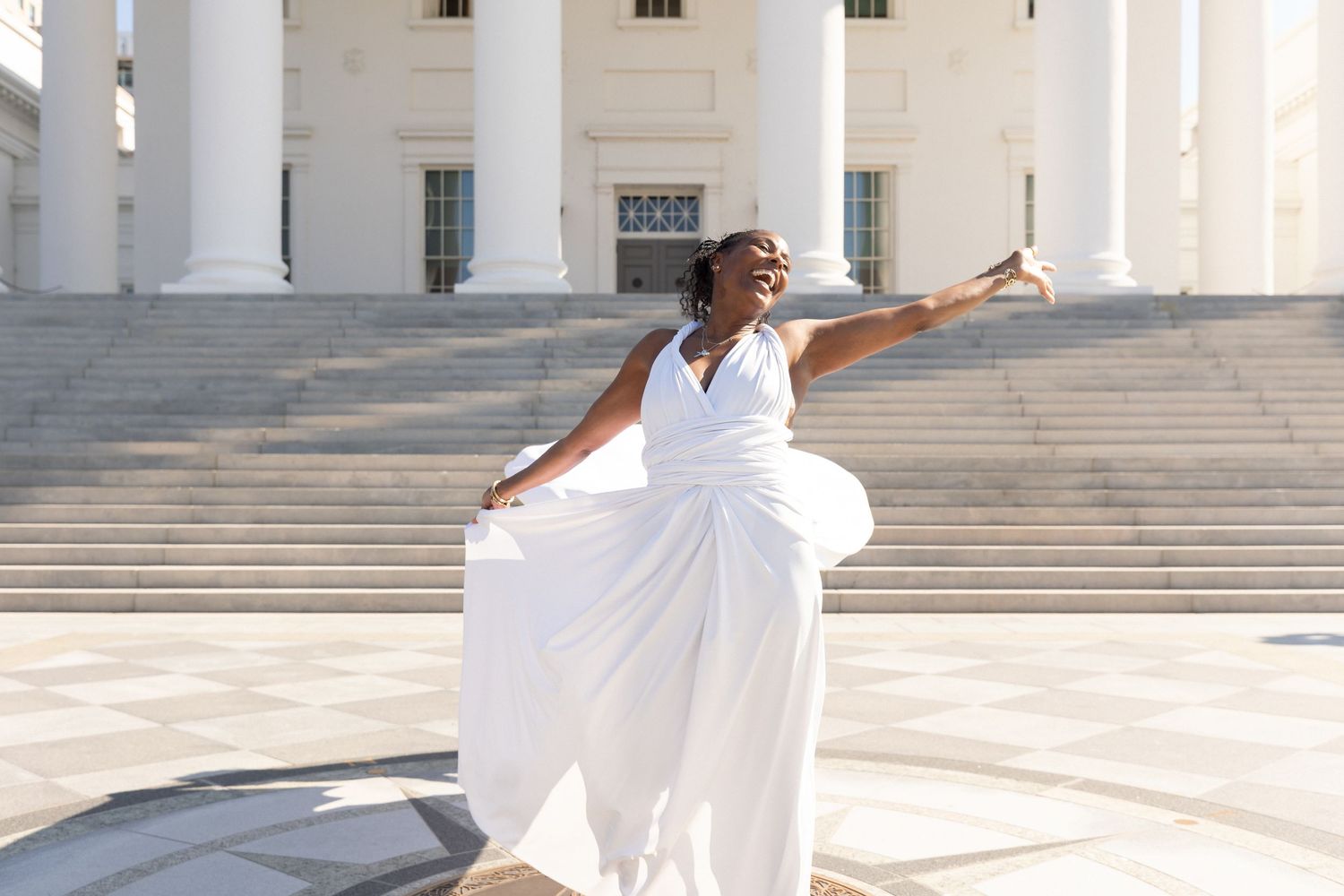

A family met me on the grounds of the Virginia State Capitol on a beautiful and clear afternoon, and by the time we wrapped, I had a set of images that looked like they belonged in a glossy print spread.
That's not an accident. It's a choice.
The daughter had found me through a Google search a few weeks earlier. She scrolled through my portfolio, looked at enough images to get a feel for how I shoot, and reached out because she wanted something with a similar look and feel for her own family. That's the part I don't take for granted - someone landing on my site as a stranger and deciding, based on the work alone, that I am who should photograph the people she loves. It's a vote of confidence, and it shapes how I show up to a session.
Most people picture a family portrait session as everyone lined up, arms around shoulders, big smiles at the camera. And there's nothing wrong with that. But this family wanted something different, so we built the session around two things: wardrobe and architecture.
The wardrobe did half the work.

Instead of matching outfits, we talked in terms of a shared palette. Soft pastels mixed that popped on their skin, a little texture here and there, nothing that would fight the stone columns and marble steps behind them. Pastels can go flat against a plain background, but next to weathered stone and hard architectural lines, they pop instead of washing out. That contrast, soft fabric against solid stone, is a big part of why the images read as styled instead of casual. When your clothes are in conversation with the location instead of clashing with it, the whole image tightens up. It stops looking like people who happened to stand in front of a building and starts looking like the building was built for them.
The Capitol gave us the lines.

Columns, symmetry, steps that create natural levels. I used all of it. Instead of the usual "everybody squeeze in," I had the mom seated on a step with her daughter seated and son standing at angles behind her, weight shifted, chins doing real work. Small adjustments. A hand in a pocket instead of hanging flat. A quarter turn toward the light instead of straight at the lens. That's the difference between a snapshot and a portrait that reads like it was an editorial photoshoot.

Directing matters more than the location.

You could put three people in front of any impressive building and still get a stiff, forgettable photo if nobody tells them what to do with their bodies. My job on this shoot was less "say cheese" and more film director. Where's your weight. Chin down, now rotate it toward me. Don't look at the camera, look at your brother. Small directions, but they're the reason the images have movement and tension instead of everybody just standing there.
There's also something that happens once people trust the direction. The mom relaxed into it. Her son started cracking jokes between setups. The daughter, who'd only known my work through a screen a few weeks earlier, was now watching it come together in person, and I could see her recognize the images she'd hired me for. That trust is what let us push past the standard portrait and into something with more personality.


That's the whole idea behind how I shoot. Photos should hold a story, not just document that a family was in the same place at the same time. When you plan your photoshoot with intention, even a Tuesday afternoon in front of a government building can look like it belongs on the front of Vogue.
If you've got a location in mind and a family who's up for being directed a little, that's usually all it takes.